FOR PATIENTS
Your care, centered around you
We believe good orthopaedic care is about more than seeing a surgeon.
Our approach brings together experienced specialist nurses, doctors, physiotherapists and rehabilitation professionals, working collaboratively to support you from diagnosis through treatment, rehabilitation and recovery.
Dr Kejriwal oversees your orthopaedic care and works closely with the wider team, including your own physiotherapist and healthcare providers where appropriate. This multidisciplinary approach helps ensure you have access to the right expertise at each stage of your journey.
Your Consultation
We want you to feel heard, understand your diagnosis and be involved in decisions about your treatment.
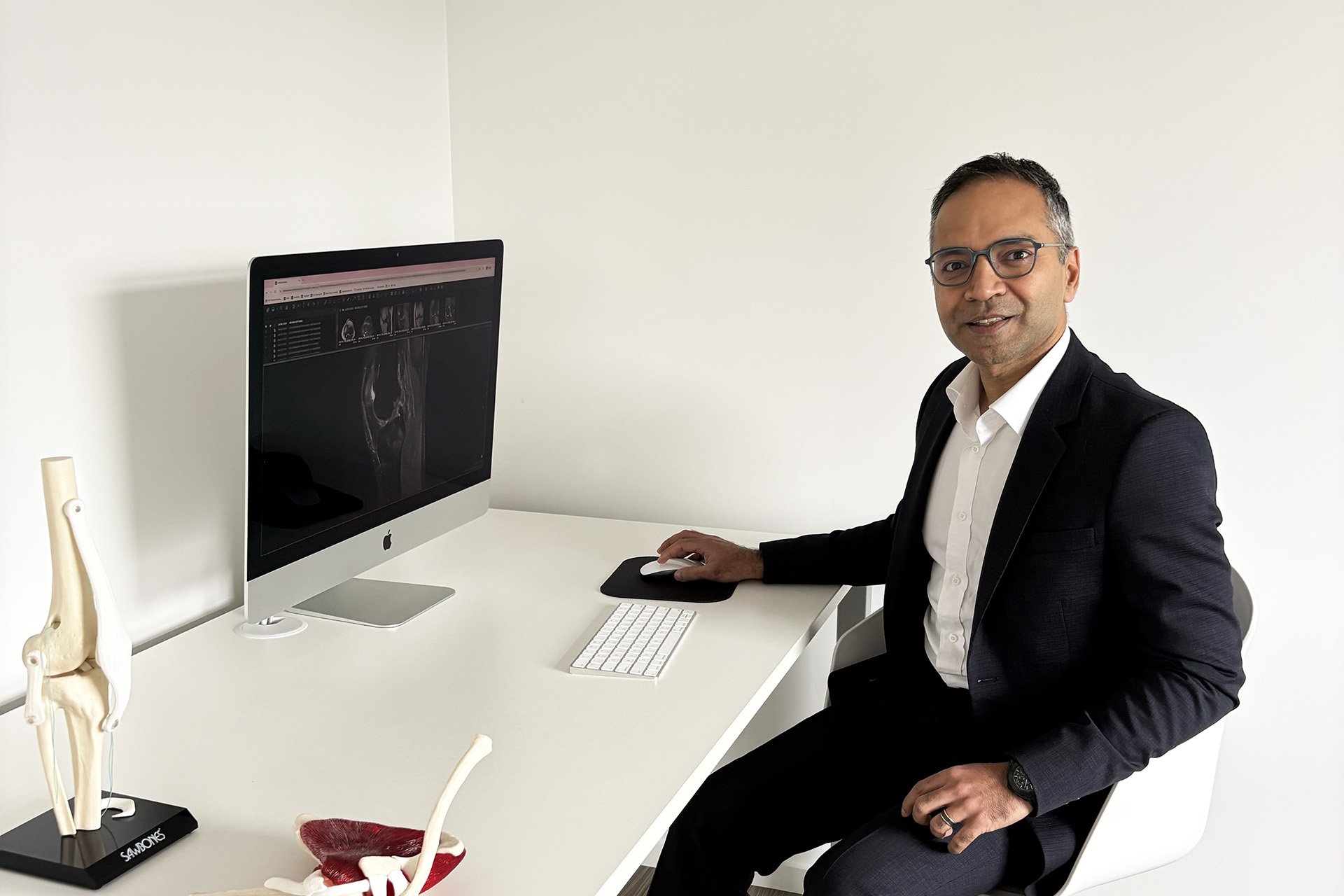
During your consultation, Dr Kejriwal uses a secure AI-assisted transcription service to help document the conversation. This reduces the need to type or take extensive notes during your appointment, allowing greater focus and attention to you and your concerns.
Your diagnosis, imaging and treatment options will be discussed with you, including non-surgical options wherever appropriate. Our aim is for you to leave with a clear understanding of your condition and what happens next.
A Team Approach
Depending on your needs, you may see members of our specialist team at different stages of your care.
This may include experienced nurses, doctors and rehabilitation professionals with expertise in knee and shoulder conditions. We also work closely with physiotherapists and other healthcare professionals involved in your care.
Whether your treatment involves rehabilitation, an injection, surgery or a combination of approaches, our goal is to provide coordinated, evidence-based care focused on getting you back to the activities that matter to you.
Frequently Asked Questions (FAQs)
-
A GP or physiotherapist referral is preferred, as it helps us understand your history and arrange any relevant imaging before your appointment. However, self-referrals may also be accepted in some circumstances.
-
In our practice, MRI plays an important role in diagnosing knee and shoulder injuries. We have a low threshold for arranging an MRI because it provides detailed information about ligaments, tendons, cartilage and menisci that cannot always be determined from examination alone.
An accurate diagnosis is the foundation of good treatment. MRI helps us identify the exact injury, rule out associated problems, and develop the most appropriate management plan—whether that involves rehabilitation, an injection or surgery.
Learn more: Knee Conditions | Shoulder Conditions | ACL Injuries
-
The timing of surgery depends on your individual condition and whether further rehabilitation or investigations are recommended beforehand. It also depends on whether your treatment is being funded privately or through ACC, as insurance and ACC approval times and private hospital theatre availability can influence scheduling.
-
Item descripDr Kejriwal uses a secure AI-assisted transcription service to document consultations. This allows him and his team to spend less time typing notes and more time listening, examining and discussing your treatment. Your consultation remains private, and the technology is used to improve documentation and communication.
Learn more: Privacy Policy
-
This depends on which joint has been operated on, the type of surgery performed and which leg or shoulder is affected. You should only return to driving when you can safely control the vehicle, perform an emergency stop comfortably, and are no longer taking medications that may impair your ability to drive. Typically you will be able to drive without restrictions when you are no longer requiring your knee post-op brace or your shoulder sling.
We will provide personalised guidance during your recovery based on your procedure and progress.
-
The timing of your return to work depends on the type of surgery you have and the physical demands of your job.
People with desk-based or sedentary work may return within a few weeks, while those performing manual work, heavy lifting or physically demanding occupations often require a longer recovery period.
Our goal is to help you return to work safely. We will discuss an expected timeframe during your consultation and review your progress at follow-up appointments.
-
Not necessarily. The right treatment depends on your age, activity level, knee stability, associated injuries and sporting goals. Some patients can be successfully managed with rehabilitation alone, while others may benefit from ACL repair or reconstruction.
Learn more: ACL Injuries | Do I Need ACL Surgery? | ACL Repair | ACL Reconstruction & Graft Choice
-
ACL repair preserves and repairs your own ligament and is suitable only for selected tear patterns. ACL reconstruction replaces the torn ACL with a tendon graft and remains the most common treatment for complete ACL tears.
Learn more: ACL Repair | ACL Reconstruction & Graft Choice
-
Recovery varies between individuals. Return to pivoting sports following ACL reconstruction is generally not recommended before 12 months and should only occur after passing formal Return to Sport testing with your physiotherapist.
Learn more: ACL Rehabilitation & Return to Sport